Depression is more than just sadness or emotional stress. It is a serious mental health condition that can affect mood, energy levels, sleep, concentration, relationships, and overall quality of life. While many patients improve with medications and counseling, a significant number continue to struggle despite trying multiple antidepressants.
This is where advanced treatment options like TMS Therapy are changing the landscape of mental health care.
Today, many patients searching for alternatives to long-term medications are asking an important question:
“Can TMS Therapy treat depression without medicines?”
The answer is — in many carefully selected cases, yes.
Transcranial Magnetic Stimulation (TMS) Therapy is an advanced, non-invasive brain stimulation treatment that is increasingly being used for patients with depression, especially those who have not responded well to medications or experience side effects from antidepressants.
Under the guidance of experienced specialists like Dr. Kunal Bahrani, TMS Therapy is becoming an important treatment option for patients seeking modern, non-drug approaches for depression management.
What Is Depression?
Depression is a medical condition that affects how a person feels, thinks, and functions emotionally and physically.
Common symptoms include:
- Persistent sadness
- Loss of interest in activities
- Fatigue
- Sleep disturbances
- Anxiety
- Difficulty concentrating
- Low motivation
- Feelings of hopelessness
- Appetite changes
In severe cases, depression may affect work performance, social relationships, and overall daily functioning.
Why Do Some Patients Look for Depression Treatment Without Medicines?
Antidepressants can be highly effective for many people, but not every patient responds the same way.
Some individuals:
- Do not improve adequately with medicines
- Experience side effects
- Need long-term medication adjustments
- Prefer non-drug therapies
- Cannot tolerate higher doses
- Continue to have recurrent symptoms
This has increased interest in advanced therapies such as TMS treatment for depression.
What Is TMS Therapy?
TMS stands for Transcranial Magnetic Stimulation.
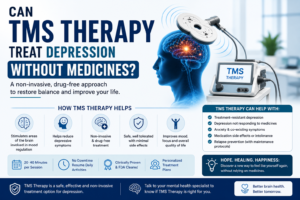
It is a non-invasive procedure that uses magnetic pulses to stimulate specific areas of the brain involved in mood regulation.
Unlike surgery or invasive procedures:
- No cuts are involved
- No anesthesia is required
- Patients remain awake
- There is no hospitalization
TMS Therapy works by targeting brain regions that may become underactive in depression.
How Does TMS Therapy Work for Depression?
In patients with depression, certain parts of the brain responsible for mood control may show reduced activity.
TMS Therapy delivers controlled magnetic pulses to stimulate these brain areas and improve communication between nerve cells.
Over time, this stimulation may help:
- Improve mood
- Reduce depressive symptoms
- Increase motivation
- Improve concentration
- Enhance emotional stability
This is why many specialists now recommend TMS therapy for treatment-resistant depression.
Can TMS Therapy Treat Depression Without Medicines?
In selected patients, TMS Therapy may significantly reduce depression symptoms without relying entirely on medications.
Some patients:
- Use TMS along with medicines initially
- Later reduce medication dependency under supervision
- Improve with TMS after failing multiple medications
- Seek TMS due to medication side effects
However, treatment plans vary from person to person and should always be individualized by a qualified specialist.
Who Is the Right Candidate for TMS Therapy?
TMS Therapy may be considered for patients who:
- Have depression not improving with medications
- Experience antidepressant side effects
- Prefer non-invasive treatment
- Have recurrent depressive episodes
- Want additional support alongside therapy
It is particularly useful in:
- Treatment-resistant depression
- Chronic depression
- Anxiety-related depressive symptoms
Why TMS Therapy Is Gaining Popularity
The demand for TMS therapy in Delhi NCR and across India is increasing because patients are becoming more aware of non-drug treatment options.
Reasons Include:
Non-Invasive Procedure
No surgery or injections are required.
No Sedation Needed
Patients remain awake during treatment.
Minimal Recovery Time
Patients can usually resume normal activities immediately.
Fewer Systemic Side Effects
Unlike some medications, TMS does not commonly cause:
- Weight gain
- Drowsiness
- Sexual side effects
- Digestive issues
Growing Scientific Support
Research continues to support TMS therapy for depression in carefully selected patients.
What Happens During a TMS Therapy Session?
A typical TMS session is simple and comfortable.
During treatment:
- The patient sits in a chair
- A magnetic coil is placed near the scalp
- Gentle magnetic pulses are delivered to targeted brain areas
Patients may hear clicking sounds and feel mild tapping sensations on the scalp.
Sessions usually last around 20–40 minutes depending on the protocol.
Is TMS Therapy Painful?
Most patients tolerate TMS Therapy very well.
Some individuals may experience:
- Mild scalp discomfort
- Temporary headache
- Tingling sensation
These symptoms are usually mild and improve as treatment progresses.
How Long Does TMS Therapy Take to Show Results?
Response time varies from person to person.
Some patients notice improvement within:
- 2–3 weeks
Others may require:
- Multiple sessions over several weeks
The full benefit often develops gradually as brain activity patterns improve.
TMS Therapy vs Antidepressants
| Feature | TMS Therapy | Antidepressants |
| Non-invasive | Yes | No |
| Systemic side effects | Minimal | Possible |
| Sedation required | No | No |
| Weight gain risk | Low | Possible |
| Sexual side effects | Rare | Common in some medications |
| Daily medication required | Not always | Usually yes |
Both treatments have an important role, and the right choice depends on the patient’s condition and medical evaluation.
Can TMS Therapy Help Anxiety Too?
Many patients with depression also suffer from anxiety.
TMS Therapy is being explored for:
- Anxiety disorders
- OCD
- PTSD
- Mood disorders
Patients often report improvement in:
- Sleep
- Emotional control
- Stress levels
- Mental clarity
Importance of Expert Evaluation Before TMS Therapy
Not every patient with depression requires TMS Therapy.
A proper neurological and psychological assessment is important to determine:
- Severity of symptoms
- Previous treatment history
- Brain health
- Suitability for TMS
Experienced specialists like Dr. Kunal Bahrani help evaluate whether TMS Therapy may be beneficial for individual patients.
Why Patients Prefer Non-Drug Depression Treatment Options
Many patients today are actively searching for:
- depression treatment without medicines
- non-invasive depression therapy
- advanced brain stimulation therapy
- alternatives to antidepressants
This shift reflects growing awareness about personalized mental health treatment.
Patients increasingly want solutions that:
- Improve quality of life
- Reduce medication burden
- Support long-term emotional well-being
Lifestyle Support Along with TMS Therapy
Mental health treatment works best when combined with healthy lifestyle practices.
Helpful Lifestyle Changes Include:
- Regular exercise
- Stress management
- Healthy sleep routine
- Balanced nutrition
- Counseling or psychotherapy
- Reduced alcohol and substance use
Combining medical treatment with lifestyle improvement often provides better long-term outcomes.
Is TMS Therapy Safe?
TMS Therapy is generally considered safe when performed under medical supervision.
It has been widely used internationally and continues to gain acceptance as an advanced depression treatment option.
Patients should always undergo proper medical screening before starting therapy.
The Future of Depression Treatment
Mental health treatment is evolving rapidly.
Advanced technologies such as TMS Therapy are helping move treatment beyond traditional medication-only approaches.
The future of depression management is becoming:
- More personalized
- More precise
- Less invasive
- More patient-centered
This is especially important for patients who have struggled with long-term emotional distress despite conventional therapies.
Final Thoughts
Depression is a real medical condition that deserves proper treatment, support, and compassion. While medications remain valuable for many patients, advanced therapies like TMS are offering new hope for individuals seeking alternative or additional treatment options.
For many carefully selected patients, TMS Therapy may help improve depression symptoms with reduced reliance on medications.
Under the expertise of specialists like Dr. Kunal Bahrani, patients can receive advanced evaluation and guidance regarding modern non-invasive brain stimulation therapies.
Early treatment, proper diagnosis, and individualized care can make a meaningful difference in mental health recovery and overall quality of life.
FAQs
Can TMS Therapy cure depression completely?
Response varies from person to person. Many patients experience significant improvement in symptoms.
Is TMS Therapy better than antidepressants?
Both treatments have benefits. Some patients respond better to TMS, especially when medications are not effective.
Does TMS Therapy require hospitalization?
No. TMS is usually performed as an outpatient procedure.
Are there side effects of TMS Therapy?
Most side effects are mild and temporary, such as scalp discomfort or mild headache.
How long does a TMS session last?
Sessions generally last around 20–40 minutes depending on the treatment plan.